
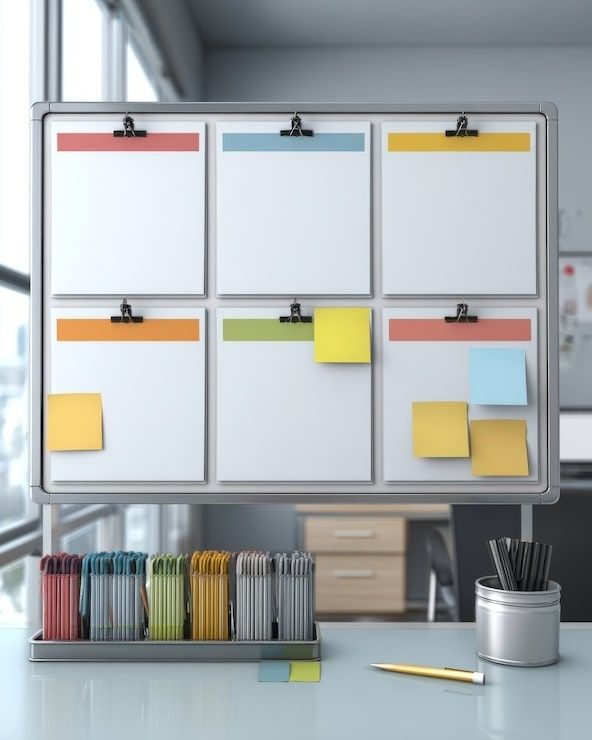
The Real Cost of the Daily Status Carousel
A recurring 15-to-30-minute status meeting looks inexpensive on a calendar, but its operational cost is much higher than the scheduled duration. A six-person engineering team can consume two to three person-hours in a single half-hour meeting. The larger loss comes from cognitive switching. An engineer who stops a design review, test analysis, production investigation, or focused coding task must close one mental context, join another, listen for relevant information, and later reconstruct the original working state. The meeting may end at 9:30, but the deep-work block may not recover until much later.
Round-robin updates also force individual contributors into passive listening. Each person waits through several reports that may have no bearing on current work, then delivers a compressed verbal summary when their turn arrives. Important details are easily missed, and blockers often surface too late for useful action. A disciplined written system, supported by clear asynchronous updates, changes the operating model. Status becomes searchable evidence, task boards remain accurate, and live discussion is reserved for decisions, incidents, and problems that genuinely require rapid collaboration.

Synchronous Meetings Compared to Asynchronous Status Workflows
A synchronous check-in requires everyone to be available at the same time, regardless of whether the information being exchanged is urgent or relevant. Preparation is often informal, updates are delivered from memory, and action items are captured inconsistently. This creates a weak control loop. Managers receive a verbal snapshot, but the system of record may still show old assignments, incomplete acceptance criteria, or tickets sitting in the wrong workflow state.
An asynchronous workflow treats status as an operational data point rather than a performance. Each update follows a fixed format, is submitted within a defined window, and remains available for later review. This does not mean abandoning live communication. It means using live time for work that benefits from immediate interaction, while routine visibility is handled through standardized records. The difference can be assessed across several practical measures.
| Operating measure | Synchronous status meeting | Written asynchronous workflow |
|---|---|---|
| Preparation | Often improvised immediately before the meeting | Brief update based on current task records |
| Context switching | Entire team interrupted at a fixed time | Each contributor chooses an approved submission window |
| Searchability | Limited to memory, notes, or recordings | Stored in a channel, document, or work-management system |
| Actionability | Blockers may be mentioned without an owner | Blocker, impact, owner, and next action can be required fields |
| Manager review | Real-time attendance is required | Exceptions and trends can be reviewed in a rollup |
The return is not simply fewer meeting hours. A written record improves traceability, especially when a technical decision must be revisited after a release, failed test, or customer escalation. It also supports distributed teams across time zones. However, written updates fail when they become long essays or duplicate information already present in the task board. The operating rule should be simple: the board describes work state, the written log describes movement and risk, and live sessions address decisions that cannot wait or cannot be resolved efficiently in text.
Configuring Single Sources of Truth with Strict Board Hygiene
An asynchronous status process depends on accurate underlying records. If a board is stale, a daily written log merely adds another layer of unreliable information. Map each board state to a real phase of work, such as Ready to Work, In Progress, Waiting On, In Verification, and Done. The names may differ by organization, but the meaning must be unambiguous. A card in In Verification should represent work that has actually reached verification, not work that someone hopes to test later.
Board configuration matters because visual columns do not independently redefine the workflow behind them. In systems such as Jira, a board displays and organizes issues, while the project workflow controls which statuses and transitions are available. A status placed in an unmapped area may disappear from the board without becoming unavailable to users. Likewise, an external status update may not move a card as expected if statuses are mapped incorrectly. Review the workflow and board mapping together, then test the transitions using real tickets rather than assuming that the column layout reflects operational reality.
Set pull criteria before a card can move into active work, and define the completion evidence required before it enters Done. Typical criteria include a clear problem statement, an identified owner, acceptance checks, dependencies, and a sensible estimate of effort. Definition of Done may require code review, automated tests, documentation, deployment confirmation, or verification by a designated role. Card metadata should answer the questions that normally trigger status meetings.
- Who owns the item and what is the current delivery target?
- What phase is the work in right now?
- What dependency or risk could change the target?
- What evidence is required before the item advances?
- When was the card last updated?
Make stale records visible. A ticket with no update for several working days should trigger review, not remain hidden in an apparently healthy lane. Limit work in progress where possible, because excessive parallel work conceals queues and encourages half-finished tasks. The board should function like a production control panel: every lane has a defined meaning, every card has an accountable owner, and movement is supported by evidence.
Step-by-Step Implementation of the Daily Written Log
Start with a deliberately narrow format. A useful immutable structure contains three bullets: shipped items, current focus, and explicit blockers. “Immutable” means the submitted entry is not silently rewritten after the fact. Corrections can be added as follow-ups, preserving the original record and making changes in direction visible. A concise format reduces reporting overhead while giving technical leads enough information to identify risk.
- Shipped items should identify completed work, such as a merged change, deployed service, closed defect, or finished test run.
- Current focus should name the next meaningful work item and link to its board card or design document.
- Explicit blockers should state the dependency, its impact, and the action or owner needed to remove it. If no blocker exists, write “None.”
Set a submission window that supports different working patterns. For example, updates might be due by late morning in each contributor”s local time, with a second review window for leads later in the day. The exact timing matters less than consistency. Use one primary platform, such as a project channel or work-management system, rather than allowing updates to scatter across private messages, email, and separate documents. The goal is one dependable inspection point.
Automation should reduce administration, not create a new reporting burden. A reminder can notify only people whose update is missing after the cutoff. A bot can roll up entries into a lead view containing new blockers, overdue cards, changed delivery dates, and items that have remained in the same state too long. This is more useful than an unfiltered transcript. Research and practical guidance on asynchronous standups emphasizes concise shared updates, while also noting that urgent issues and complex discussions should move into appropriate live channels rather than being forced into a reporting template. Pilot the process for a couple of weeks, collect feedback, and remove fields that do not drive a decision.
Decoupling Blocker Resolution with Asynchronous Triage Trees
The most damaging feature of a daily status meeting is often the implied waiting period. If an engineer identifies a missing environment variable, an unavailable test fixture, a vendor dependency, or an approval delay immediately after the meeting, the blocker may sit for nearly a full day before reaching the person who can act. That delay is especially expensive when the blocked task is on the critical path. A written workflow should make escalation available as soon as the problem is known.
Use a priority rubric that distinguishes routine coordination from operational emergencies. Not every blocker deserves an interruption, and treating every issue as urgent will recreate the same fragmented calendar under a different name.
- Routine dependency should be posted in the task thread with the requested action, owner, and response target.
- Delivery risk should be raised in a shared triage channel and linked to the affected milestone or board item.
- High-impact degradation should use the designated operational escalation path, with a clear incident owner.
- Immediate service impact should trigger the incident page or on-call mechanism, not wait for an asynchronous reply.
Every handoff should use the same minimum documentation. State the problem, affected system, observed evidence, impact, attempted actions, current owner, requested action, and next review time. For dependencies, add the upstream team, required artifact, due date, and consequence of non-delivery. A technical lead should be able to read the handoff without asking the author to repeat the entire history. This is the human equivalent of a well-instrumented workflow: the current state, transition conditions, and failure path are visible.
Asynchronous triage also needs response expectations. A thread ping may have a four-hour response target, while a production incident may require immediate paging. If no response arrives within the agreed period, the next escalation step should be explicit. Use live problem-solving meetings when the issue is genuinely complex, when several parties must reason together, or when written discussion is creating delay. The purpose is not to make communication slower. It is to prevent low-value synchronization from delaying high-value work.
Transition Your Team to Autonomous Progress Tracking
Replace a status meeting through a controlled pilot rather than a sudden organization-wide rule. Select one subsystem team, document the current meeting cost, and run a two-week trial using the written log, clean board states, and blocker triage rules. Before the pilot begins, explain what information belongs in each system and define the conditions that still justify a live meeting. A weekly review may remain appropriate for decisions, risk resolution, or planning, but routine recitation should stay out of it.
- Record baseline measures such as sprint completion, cycle time, unresolved blockers, meeting hours, and engineer satisfaction.
- Run the written workflow for two weeks, reviewing exceptions daily without turning the review into a replacement status meeting.
- Compare the results, inspect stale cards and missed escalations, then adjust the format based on evidence.
- Protect the recovered calendar blocks by declining duplicate meetings and reserving uninterrupted engineering time.
Success means more than deleting a recurring invitation. It means that a lead can identify risk without interrupting every contributor, that an engineer can report progress without waiting for a speaking turn, and that a blocker reaches the right owner while it still matters. Once the process is stable, extend it carefully to adjacent teams and retain live collaboration for incidents, decisions, learning, and work that benefits from direct interaction. Clear written workflows do not reduce visibility. They convert visibility into a durable operating system that protects focus and makes progress easier to verify.